
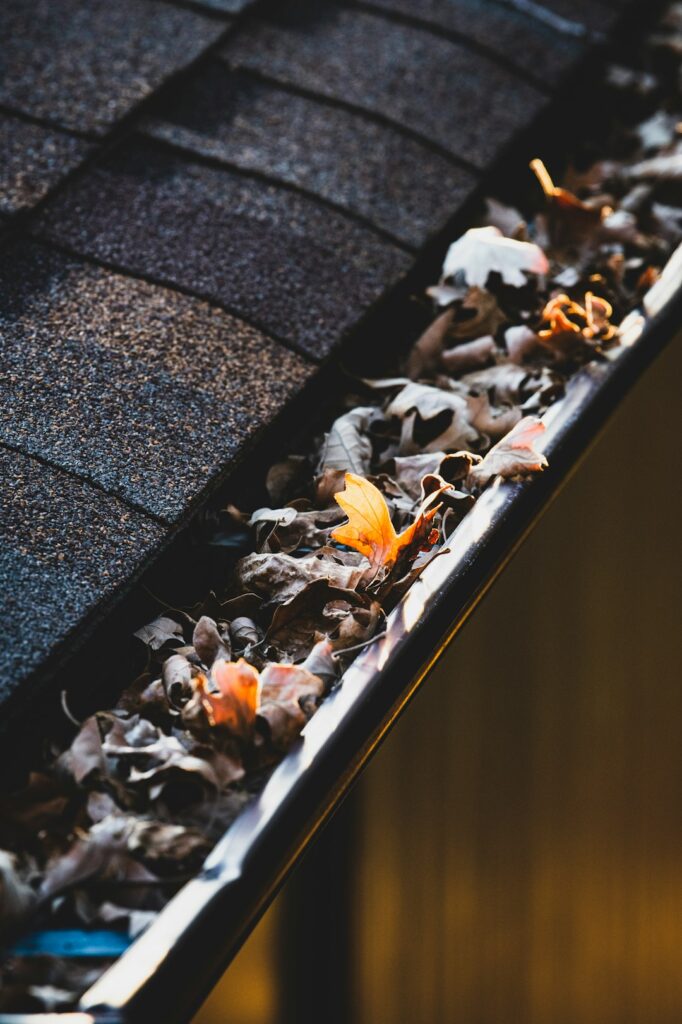
Gutters are part of a roofing system, not just an accessory attached to the edge of a house. By directing rainwater and melting snow away from the roofline, walls, foundation, and landscaping, they help control where water goes. When gutters become blocked, overflowing water can begin affecting roofing materials and the structure beneath them.
For homes in East Syracuse, NY, regular gutter cleaning is especially useful because the area experiences heavy seasonal precipitation, falling leaves, freeze-thaw cycles, and substantial winter snow. These conditions can turn a small blockage into a roof, siding, or drainage problem.
What does gutter cleaning have to do with roofing?
Clean gutters help prevent water from backing up beneath the roof edge. When leaves, twigs, shingle grit, and other debris block the flow, water may spill over the front of the gutter or collect along the roof’s lower edge.
Repeated overflow can contribute to:
- Rotting roof-edge boards and fascia
- Deteriorated soffits and trim
- Water staining on exterior walls
- Moisture entering attic or wall cavities
- Erosion near the foundation
- Loose or sagging gutter sections
- Accelerated wear around roof edges and flashing
The roof itself may still look intact from the ground while moisture is damaging concealed wood components. This is why gutter maintenance belongs in a basic roofing care routine.
How can clogged gutters cause roof leaks?
A clogged gutter does not usually create a leak through the middle of a roof. The more common problem is water collecting where the roof, gutter, fascia, and flashing meet.
As water overflows or backs up, it can soak wood behind the gutter. Over time, that moisture may weaken the roof edge and create openings around fasteners, joints, and flashing. Once wood swells, rots, or pulls away from adjoining materials, water has more opportunities to enter.
Heavy debris can also hold moisture against roofing components. Wet leaves and organic material may trap water near the eaves, encourage decay, and make it harder for the area to dry after rain or melting snow.
Why is fall gutter cleaning important in East Syracuse?
Fall is often the most important time to inspect and clean gutters because leaves can accumulate quickly before winter arrives. A gutter that drains adequately in October may become blocked after several windy days.
The timing matters because winter introduces additional stress:
- Rain may freeze inside partially blocked gutters.
- Snow and ice add weight to gutter systems and their fasteners.
- Meltwater may have nowhere to drain during brief thaws.
- Repeated freezing and thawing can loosen joints and brackets.
- Overflowing water can freeze on walkways, steps, and driveways.
Cleaning once in late fall may be enough for some properties, while homes beneath mature trees may need an earlier inspection and another check after most leaves have dropped.
Do clean gutters prevent ice dams?
No. Clean gutters can support proper drainage, but they do not by themselves prevent ice dams.
An ice dam forms when snow melts on a warmer portion of the roof and refreezes near a colder eave. Roof insulation, attic ventilation, air leaks, roof design, snow depth, and weather patterns all influence this process.
A blocked gutter can make the effects worse by preventing meltwater from moving away from the roof edge. Water may collect behind ice or spill into areas where it can damage fascia, soffits, flashing, and interior finishes.
If a home repeatedly develops large ice dams, gutter cleaning addresses only one part of the issue. The underlying roof and attic conditions may also need evaluation. Removing ice with sharp tools can damage shingles and create additional leaks.
How often should gutters be cleaned?
Many homes need gutter cleaning at least twice each year: once in spring and again in fall. The correct schedule depends on the property.
More frequent checks may be appropriate when:
- Trees overhang the roof
- The home is surrounded by wooded areas
- Pine needles collect throughout the year
- Gutters contain visible moss or decomposing leaves
- Water spills over during ordinary rain
- Downspouts frequently clog
- Birds or small animals nest near the roofline
A practical approach is to inspect gutters after major leaf drop, strong wind events, and periods of heavy rain. Looking at the system from the ground can reveal obvious overflow, sagging, or separation, but it may not show hidden blockages inside downspouts.
What signs suggest gutter problems are affecting the roof?
Several warning signs deserve attention:
- Water marks or dark staining beneath the roof edge
- Peeling paint or soft wood on fascia and trim
- Gutters pulling away from the house
- Shingles that appear damp or discolored near the eaves
- Granules collecting heavily in gutters
- Sagging sections that hold standing water
- Water entering the attic after rain
- Drips or stains along interior ceilings near exterior walls
- Patches of ice forming along the gutter line in winter

Not every roof stain is caused by a gutter problem. Roof penetrations, flashing, ventilation, and damaged shingles can also allow water inside. The location and timing of the moisture often provide useful clues.
What should homeowners check while cleaning gutters?
Gutter cleaning is also an opportunity to inspect the roof drainage system. After removing debris, check whether water can move freely through each downspout and whether discharge is directed far enough away from the foundation.
Look for:
- Loose gutter hangers and end caps
- Open seams or cracked corners
- Downspouts that disconnect during heavy flow
- Rust, holes, or corrosion
- Shingle granules or unusual roof debris
- Bent drip edges or damaged flashing
- Plants growing in the gutter
- Soil erosion below downspout outlets
Avoid scraping, walking, or leaning equipment against shingles. Asphalt shingles can lose protective granules when handled roughly, especially after they have become brittle with age or cold temperatures.
Is gutter cleaning safe to do personally?
For a one-story home with stable ground, proper equipment, and manageable gutter height, some residents choose to clean gutters themselves. Ladder placement, electrical hazards, wet surfaces, and unstable soil should be taken seriously.
Professional assistance may be necessary when gutters are high, the roof is steep, ice is present, the structure is difficult to access, or there are signs of structural damage. Climbing onto a roof to reach gutters is not advisable when the surface is wet, snowy, icy, or steep.
The safest routine is to keep feet on stable surfaces whenever possible, avoid working during windy or stormy conditions, and never treat a ladder as a substitute for inspecting whether the roof itself is safe.
How does gutter maintenance extend roof life?
Gutters cannot stop shingles from aging, storms from causing damage, or ice dams from forming. Their value is more specific: they reduce uncontrolled water exposure along the roof edge and help the drainage system perform as intended.
A clean, properly pitched, securely attached gutter allows rain and snowmelt to leave the roof in a predictable path. That helps limit moisture-related deterioration around the eaves, fascia, soffits, wall surfaces, and foundation.
For area households, a seasonal gutter inspection is a relatively simple way to identify drainage and roof-edge problems before winter weather, repeated freeze-thaw cycles, or spring runoff make them more difficult to manage.
