
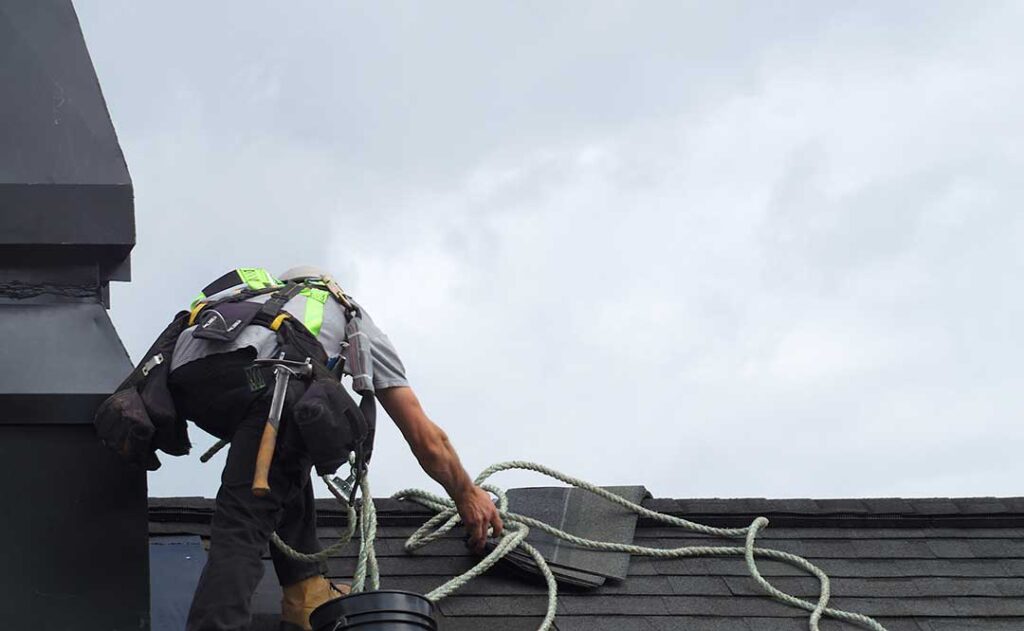
Roof penetrations are any places where an object passes through the roof surface, such as plumbing vents, chimneys, skylights, bathroom exhaust ducts, satellite mounts, and electrical conduits. These openings are necessary, but each one creates a potential path for water, wind, and cold air if it is not properly sealed.
In East Syracuse, NY, roof seals must withstand rain, snow, ice, freeze-thaw cycles, summer heat, and strong seasonal temperature changes. A seal that looks acceptable during dry weather may fail after repeated expansion, contraction, and snow loading.
What is the correct way to seal a roof penetration?
The proper method depends on the type of penetration, the roofing material, and whether the opening is new or being repaired. In most cases, a durable seal uses both a correctly fitted flashing component and a compatible sealant or membrane. Sealant alone is rarely a reliable long-term solution.
A sound repair generally involves these steps:
- Identify the source and type of penetration.
- Remove loose, cracked, or failed sealing materials.
- Inspect the surrounding shingles, underlayment, flashing, and roof sheathing.
- Install or repair flashing so water is directed around the penetration.
- Apply a compatible sealant only where it is designed to be used.
- Fasten components securely without creating unnecessary holes.
- Check the area after rain or melting snow.
Flashing should perform most of the water-shedding work. Sealant helps close joints and protect fasteners, but it should not be expected to compensate for missing, undersized, or incorrectly installed flashing.
Which roof penetrations are most likely to leak?
Plumbing vent pipes are common trouble spots because their flashing boots can crack, shrink, or become brittle. The rubber collar around the pipe may fail even when the surrounding shingles still appear to be in good condition.
Other frequent leak sources include:
- Chimney intersections
- Skylight curbs and frames
- Bathroom and kitchen exhaust vents
- Roof-mounted electrical or communication conduits
- Heating-system vents
- Former antenna or satellite mounts
- Solar equipment attachments
- Dormer walls and roof-to-wall transitions
A leak may not appear directly below the penetration. Water can travel along roof decking, rafters, insulation, or ceiling materials before it becomes visible inside the home. A ceiling stain therefore does not always identify the exact entry point.
How should a plumbing vent boot be sealed?
A plumbing vent boot should fit tightly around the pipe and lie flat over or beneath the appropriate shingle courses according to the roof design. The upper part of the flashing should be integrated with the water-shedding layers, while the lower portion should allow water to drain over it.
A typical inspection looks for:
- Cracks in the rubber or synthetic collar
- Rust, distortion, or gaps in the metal flashing
- Lifted or displaced shingles
- Exposed fasteners
- Hardened sealant around the pipe
- Water marks or damp insulation below the penetration
Adding a thick bead of caulk around an aging boot may slow a leak temporarily, but it does not replace a deteriorated flashing assembly. If the collar is split or the base is corroded, replacement is usually more dependable than surface sealing.
Is roofing cement or caulk enough to stop a leak?
Usually not. Roofing cement, exterior sealant, and caulk can be useful for limited applications, such as sealing a small joint, covering a properly placed fastener, or reinforcing a compatible flashing seam. They are not substitutes for correct flashing, underlayment, or shingle integration.
Common mistakes include:
- Smearing sealant over wet or dirty surfaces
- Applying sealant to incompatible materials
- Covering a large area instead of correcting the failed detail
- Sealing a drainage path that needs to remain open
- Using interior-grade caulk outdoors
- Relying on sealant over a cracked flashing boot
- Applying material during temperatures outside the product’s working range
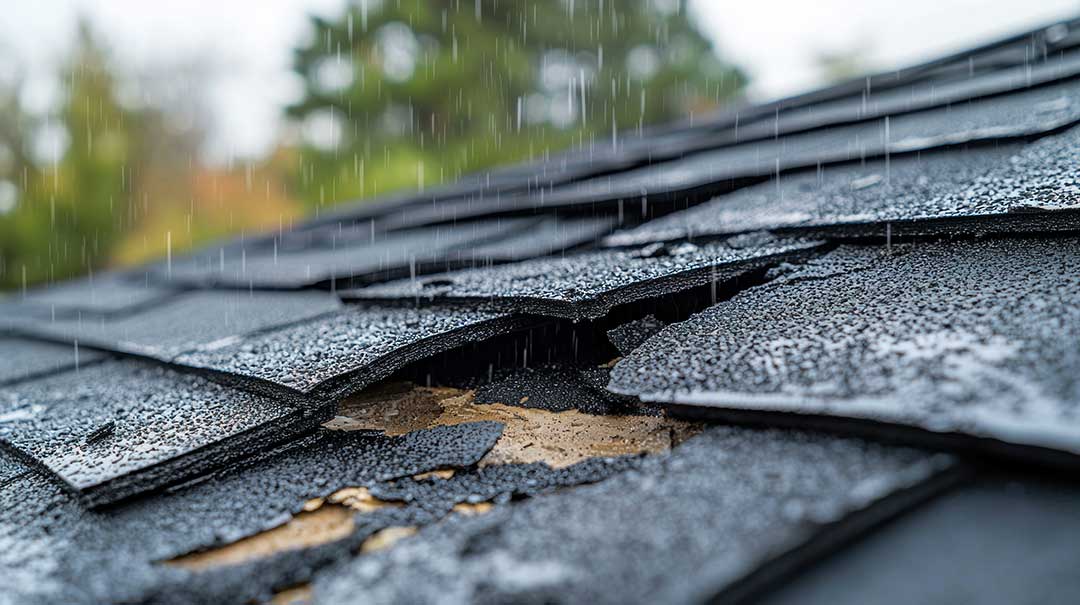
Sealants also age. Ultraviolet exposure, movement, ice, and repeated temperature changes can cause them to shrink, split, or detach. A repair should be designed so that the sealant is not the only barrier against water.
How are chimneys and roof-to-wall areas sealed?
Chimneys require several flashing components rather than a single bead of sealant. The base flashing directs water around the chimney, while step flashing is integrated with the shingles along the sides. Counterflashing, often set into the masonry or a dedicated joint, helps cover the upper edges of the flashing.
The joints around a chimney should be inspected for:
- Open or cracked mortar joints
- Loose counterflashing
- Missing step flashing
- Rusted metal
- Gaps where the roof meets the masonry
- Water stains on the attic side
Roof-to-wall intersections, including dormers, need similar attention. Ice and snow can remain against these areas longer than on exposed roof slopes, increasing the demand on flashing and drainage. A visible line of caulk along the wall is not proof that the underlying flashing is correctly installed.
How should exhaust vents and electrical penetrations be handled?
Exhaust vents should discharge outdoors through a dedicated roof or wall termination, not into an attic or enclosed roof cavity. The vent cap should include a weather-resistant hood or equivalent protection, and the duct should be supported so it does not pull on the roof flashing.
Electrical conduits and other small penetrations should use properly sized boots, collars, or listed flashing components. The opening should not be enlarged unnecessarily, and exposed wiring should not be pinched beneath flashing or shingles.
For any penetration connected to electrical, fuel-burning, ventilation, or structural systems, safety requirements may apply. Work involving energized wiring, combustion vents, or major roof alterations may require qualified oversight and compliance with applicable building requirements.
What does winter weather change?
Cold weather affects both the roof materials and the sealant. Some products will not bond correctly to icy, damp, dusty, or very cold surfaces. Snow and ice can also hide lifted shingles, cracked flashing, or water paths.
In the local climate, useful inspection times include:
- After heavy rain
- During or after a rapid snowmelt
- Following freeze-thaw cycles
- After strong wind
- Before winter, if roof access can be performed safely
Ice dams can push water beneath shingles and around penetrations, making a flashing problem appear worse than it is. Improving attic insulation, air sealing, and ventilation can reduce ice-dam formation, but those measures do not repair defective roof flashing.
When is roof access unsafe?
Roof penetrations should not be inspected by walking on a roof covered with snow, frost, ice, or loose granules. Steep slopes, fragile skylights, weak decking, overhead electrical hazards, and unstable ladders create serious risks.
From inside the attic, a homeowner may be able to check for darkened wood, damp insulation, mold-like growth, rusted fasteners, or daylight around an opening. Do not touch wet electrical components or disturb suspected combustion vents.
If water is actively entering near wiring, a ceiling fixture, or a fuel-burning appliance, shut off power only if it can be done safely and address the immediate hazard before investigating the roof. A persistent leak, damaged roof structure, chimney movement, or failed flashing system requires evaluation by someone qualified to work safely on that type of roof.
How often should penetrations be checked?
A visual inspection at least twice a year is reasonable for many homes, along with checks after major storms or unusual winter weather. Look from the ground first, then inspect accessible attic areas without climbing onto unsafe surfaces.
Pay particular attention to repairs made with exposed sealant. A new crack, gap, stain, or displaced shingle can signal movement beneath the surface. Promptly correcting a small flashing defect may prevent saturated insulation, damaged decking, interior staining, and hidden structural deterioration.
The most durable roof penetration repair is not the one with the most sealant. It is the one that restores the correct water-shedding layers, uses compatible materials, leaves drainage paths open, and accounts for the repeated wetting, freezing, thawing, and heating that local roofs experience.
