
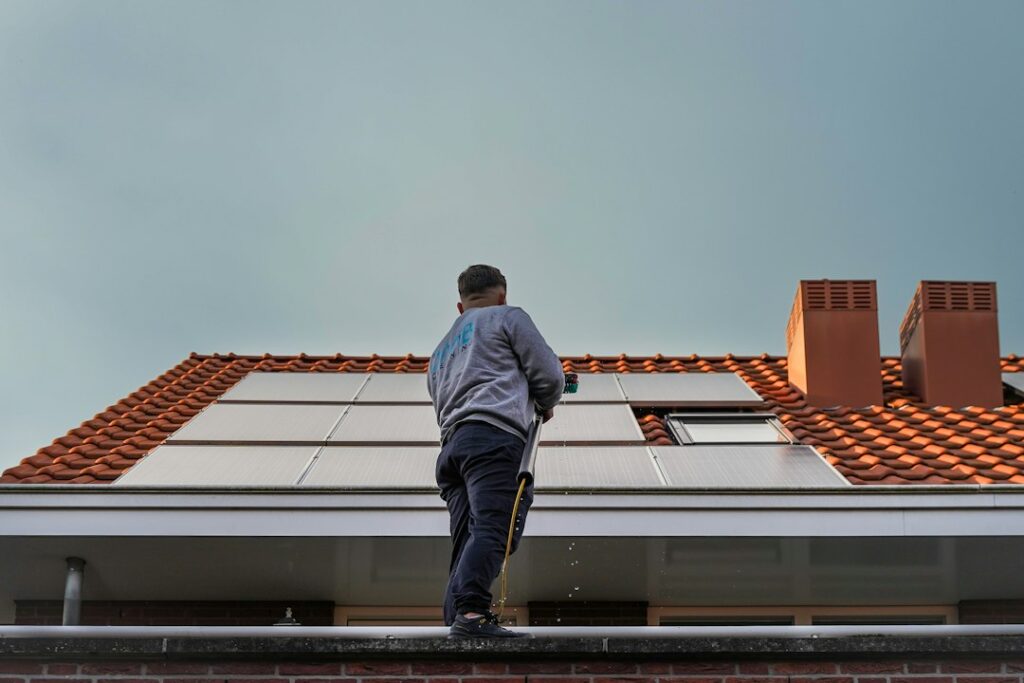
Is it safe for a homeowner to walk on the roof?
Usually, no. A roof can appear stable while hiding weak decking, loose shingles, wet algae, frost, or damage beneath the surface. Even a single-story roof can produce serious injuries if a person slips near an edge or loses footing on a slope.
For most routine checks, ground-level observation is safer than climbing. Use binoculars to look for missing shingles, sagging areas, damaged flashing, blocked gutters, or branches resting on the roof. Photos taken from the ground can also help track changes over time.
A roof should not be walked on during or shortly after:
- Rain, snow, freezing rain, or frost
- Strong or gusty wind
- Extreme heat, when roofing materials may become soft
- Heavy dew or visible moisture
- Ice buildup or melting snow
- Storm damage, when the structure may be unstable
The roof’s pitch and surface material also matter. Metal roofing, slate, steep asphalt shingles, and moss-covered surfaces can be especially difficult to cross safely.
Why does local weather make rooftop work riskier?
Seasonal weather in East Syracuse creates several conditions that can turn a simple inspection into a fall hazard. Snow may hide damaged shingles or roof edges, while freeze-thaw cycles can loosen materials and create slick surfaces. Spring moisture can also make roof coverings slippery before the surface appears visibly wet.
Winter snow and ice should not be climbed onto casually. Snow loads can conceal skylights, vents, weak areas, and roof edges. Removing snow from a roof also introduces risks from falling snow, shifting loads, ladders, and tools.
After a windstorm, avoid approaching loose materials from above. A damaged chimney, vent, gutter, or section of roofing may shift when touched. Look from the ground first and keep people away from areas where materials could fall.
What should homeowners check before using a ladder?
A ladder is often more dangerous than the roof itself when it is placed on uneven, icy, or unstable ground. Before setting one up, inspect the area carefully.
The ladder should be:
- Placed on firm, level ground
- Kept away from ice, snow piles, loose soil, and slippery surfaces
- Positioned clear of overhead electrical lines
- Long enough for the task without standing on the top step
- Free of bent rails, cracked steps, missing feet, or damaged hardware
- Secured so it cannot slide, tip, or shift
Face the ladder while climbing and keep both hands available whenever possible. Maintain three points of contact—two hands and one foot, or two feet and one hand. Do not carry bulky tools while climbing. Use a tool belt, hoist line, or another method that keeps hands free.
Never place a ladder on top of a roof, scaffold, box, deck railing, or other elevated surface to gain extra height. Do not overreach from the side. Climb down and reposition the ladder instead.
Can a ladder be used to step onto the roof?
Accessing a roof by ladder requires more than simply reaching the eave. The ladder must be tall enough, stable, and positioned to provide a secure transition. It should extend above the landing area far enough to give the climber something to hold while stepping on or off.
The roof edge should also be clear of snow, ice, loose debris, and wet leaves. If the ladder shifts even slightly during the transition, the person can lose balance before reaching the roof surface.
A ladder may be suitable for cleaning a low gutter from a safe position, but that does not automatically make it suitable for roof access. If reaching the roof requires stretching, stepping sideways, or climbing around a corner, the setup is not safe.
What safety equipment is needed for roof work?
Proper equipment depends on the roof’s height, slope, condition, and the task being performed. Ordinary household items are not substitutes for fall-protection equipment.
Roof work may require purpose-designed equipment such as:
- Roof brackets or scaffolding
- Guardrails
- A properly installed fall-arrest system
- Approved anchor points
- Slip-resistant footwear
- Eye protection and work gloves
- Hard hats when people may be below
- A debris-control area around the structure
A harness by itself does not prevent a fall. It must be connected to a compatible system attached to a suitable anchor, and the system must be installed and used correctly. Improvised anchors such as plumbing vents, chimneys, gutters, attic framing, or handrails may fail under load.
Homeowners should not experiment with fall-arrest systems without understanding clearance requirements, anchor strength, equipment compatibility, and rescue planning. A person suspended in a harness after a fall may need prompt assistance.
How can people on the ground be protected?

Roof work creates hazards for everyone nearby, not just the person climbing. Shingles, nails, tools, ice, and broken roofing materials can fall unexpectedly.
Before any work begins:
- Keep children and pets away from the work area.
- Move vehicles, patio furniture, and fragile items away from the roof edge.
- Do not stand beneath ladders or roof edges.
- Mark or block off the area where debris may land.
- Watch for nails and sharp pieces in grass, driveways, and walkways.
- Keep doors and windows closed if dust or debris may enter the home.
Never toss tools or materials from the roof. Use controlled lowering methods, and place debris where it cannot slide or blow into neighboring areas.
Are gutters and roof edges safe to inspect?
Gutter cleaning is a common reason homeowners climb ladders, but the risk is often underestimated. Gutters may be filled with wet leaves, ice, or compacted debris that shifts when removed. The ladder can also become unstable as the person reaches outward.
Use a stable setup that allows the work to be done without leaning far to either side. Move the ladder frequently rather than stretching across a long section of gutter. Avoid working near overhead wires, during bad weather, or when the ground is frozen and uneven.
Roof edges should be viewed from the ground whenever possible. A sagging gutter, loose fascia board, or damaged soffit may not support a person’s weight.
What should homeowners do after storm damage?
After severe weather, inspect from a distance first. Look for displaced shingles, exposed underlayment, fallen branches, sagging roof lines, damaged chimneys, and debris near electrical equipment.
Do not climb onto a roof with visible structural damage, standing water, large branches, or active electrical hazards. If water is entering the home, place containers beneath leaks and move valuables away from the affected area if it can be done safely. Avoid electrical fixtures or outlets that may have become wet.
Temporary coverings can also be hazardous in wind. Loose tarps, plastic sheeting, and makeshift fasteners may create trip hazards or detach from the roof. Roof damage that affects structural stability, involves electrical lines, or cannot be reached safely should be handled by a qualified person with the proper equipment.
What is the safest routine for homeowners?
The safest routine is to inspect from the ground, keep records with dated photographs, and address small warning signs before they become urgent. Check the roof after major storms, but do not climb during unsafe conditions.
Look for changes in:
- Shingle alignment or color
- Roof sagging
- Chimney and vent flashing
- Gutter position
- Moss or algae growth
- Tree limbs touching the roof
- Water stains in attic spaces or ceilings
An attic inspection can sometimes reveal roof problems without outdoor climbing. Look for daylight through the roof deck, damp insulation, mold-like growth, rusted fasteners, or water marks. Use a flashlight and walk only on the attic floor framing or designated platforms, not between ceiling joists.
The most useful safety decision is often knowing when not to climb. A roof inspection that can wait should wait for dry, calm weather and a controlled setup. A roof that is icy, steep, damaged, or difficult to access is not an appropriate place for casual homeowner maintenance.
